Selling Your Car in Ottawa? What to Detail Before You List It
Short answer: detail what a buyer sees, smells and touches first: the interior, glass, wheels, carpets and cargo area. Skip paint correction on an older car with dents, rust or deep scratches. At Car Detailers Ottawa a standard interior detail runs $175-$235 and a full detail $250-$450.
If you’re selling a used car in Ottawa, cleaning it properly before you list it is usually worth doing. But that doesn’t mean you need to spend hundreds of dollars correcting every scratch or making an older vehicle look brand new.
The best approach is simple: clean the things a buyer will immediately see, smell, and touch, then stop spending when the cost of the work starts to outweigh the likely benefit.
For most cars, that means focusing on the interior, glass, wheels, carpets, cargo area, and obvious exterior grime. Paint correction can make sense in some cases, but it isn’t automatically a good investment.
Start With the Value of the Car
Before booking a detail, consider what the vehicle is worth and what condition it’s already in.
Spending $200 on a detail is easier to justify on a $20,000 vehicle than on a $4,000 vehicle. The same applies to paint correction. If an older car has rust, dents, deep scratches, or peeling clear coat, spending several hundred dollars polishing the paint may not change what a buyer is willing to pay.
For most sellers, the goal isn’t to make the car perfect. It’s to remove the obvious signs of neglect and present the vehicle honestly.
A useful rule is:
Fix the inexpensive cosmetic problems buyers will notice. Be cautious about expensive cosmetic work that you are unlikely to recover when you sell the car.
Clean the Interior First
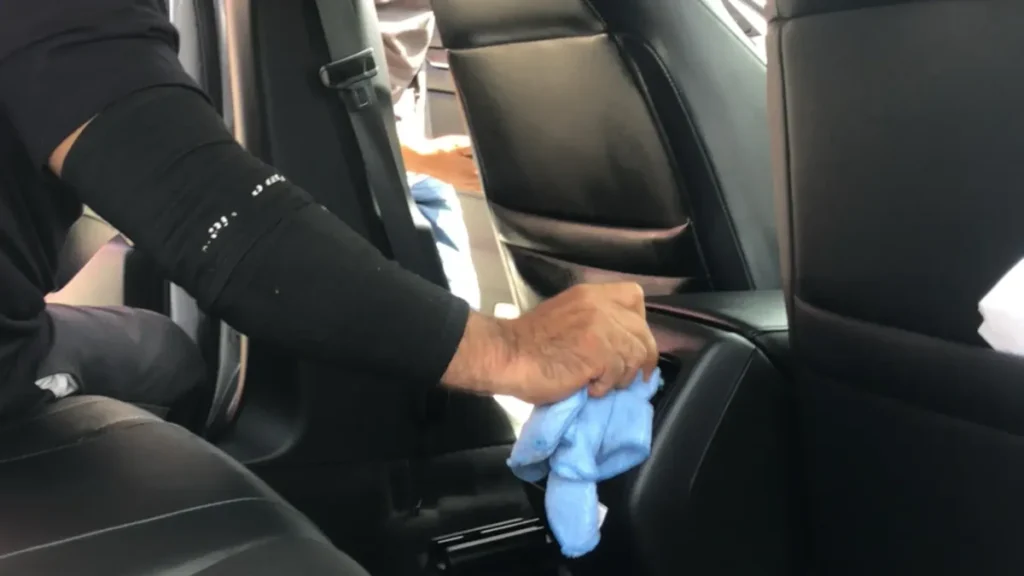
The interior is one of the easiest places for a buyer to judge how a vehicle has been treated.
Pay particular attention to:
- Seats and carpets
- Floor mats
- Cup holders
- Door pockets
- Door panels
- Dashboard and centre console
- Interior glass
- Vents and other crevices
- The trunk or cargo area
- Pet hair
- Visible stains
Odor is especially important.
Smoke, pet, food, and mildew smells can make a vehicle feel neglected even when the rest of the car is reasonably clean. Spraying air freshener over a strong odor usually makes the problem more obvious rather than solving it.
If the smell is persistent, the source needs to be cleaned or treated. Depending on the contamination, that can involve extracting carpets and upholstery or treating other porous surfaces where the odor has settled.
The goal should be a clean, neutral-smelling interior, not an artificial “new car” scent.
What a Professional Interior Detail Should Include
A proper pre-sale interior detail should go beyond a quick vacuum and wipe-down.
Depending on the package and condition of the vehicle, services can include:
- Vacuuming seats, carpets, mats, and the trunk
- Cleaning or extracting fabric upholstery
- Cleaning leather or vinyl surfaces
- Cleaning the dashboard and centre console
- Cleaning cup holders and door pockets
- Cleaning vents and tight areas
- Cleaning door jambs
- Cleaning interior glass
- Treating visible stains
- Removing pet hair
- Treating persistent odors
“Interior detail” can mean very different things from one business to another. At Car Detailers Ottawa, a standard interior runs $175-$235 for most sedans and small SUVs, a deep stain-focused interior $235-$325, and an interior with pet hair removal $260-$360. Larger vehicles, heavily soiled interiors and odour treatment push a job toward the top of its range.
The important question isn’t simply “How much does a detail cost?”
Ask what you’re actually getting.
A $150 service that consists mainly of vacuuming and wiping surfaces isn’t equivalent to a $200 service that includes extraction, stain treatment, and deeper cleaning.
Don’t Expect Detailing to Fix Body Damage
Detailing can improve the appearance of a vehicle, but it isn’t body repair.
A detailer can usually improve things such as:
- Dirt and road film
- Light stains
- Embedded interior grime
- Pet hair
- Interior odors
- Light paint swirls
- Light oxidation
- Some water spotting
- Overall gloss and cleanliness
It won’t normally repair:
- Dents
- Rust
- Deep scratches
- Peeling clear coat
- Cracked or badly torn upholstery
- Major paint failure
- Mechanical problems
- Damaged body panels
This distinction is important when deciding where to spend your money.
For example, if a car has a dented door and several deep scratches, spending $500 or more on paint correction may not be the best use of your money. If the same vehicle has reasonably good paint covered in light swirl marks from years of automatic car washes, polishing could make a noticeable difference.
Is Paint Correction Worth It Before Selling?
Sometimes, but it shouldn’t be the first thing you book.
Paint correction uses machine polishing to improve the appearance of paint defects. A one-step polish can often improve gloss and reduce lighter swirl marks, oxidation, and other surface imperfections.
It cannot, however, restore paint that is no longer there.
If a scratch has gone through the clear coat and into the underlying paint or metal, polishing won’t make it disappear. Deep scratches, rust, dents, and peeling clear coat require different repairs.
Our 1-stage correction runs $300-$450 and 2-stage correction $450-$700, depending on the size and condition of the vehicle and how much correction is included.
For a newer or higher-value vehicle with otherwise good paint, that expense may be reasonable.
For an older vehicle with significant body damage, it often isn’t.
If a buyer is going to notice the rust and dents from ten feet away, don’t spend hundreds of dollars trying to perfect the paint around them.
Ottawa Winter Grime Is Worth Cleaning
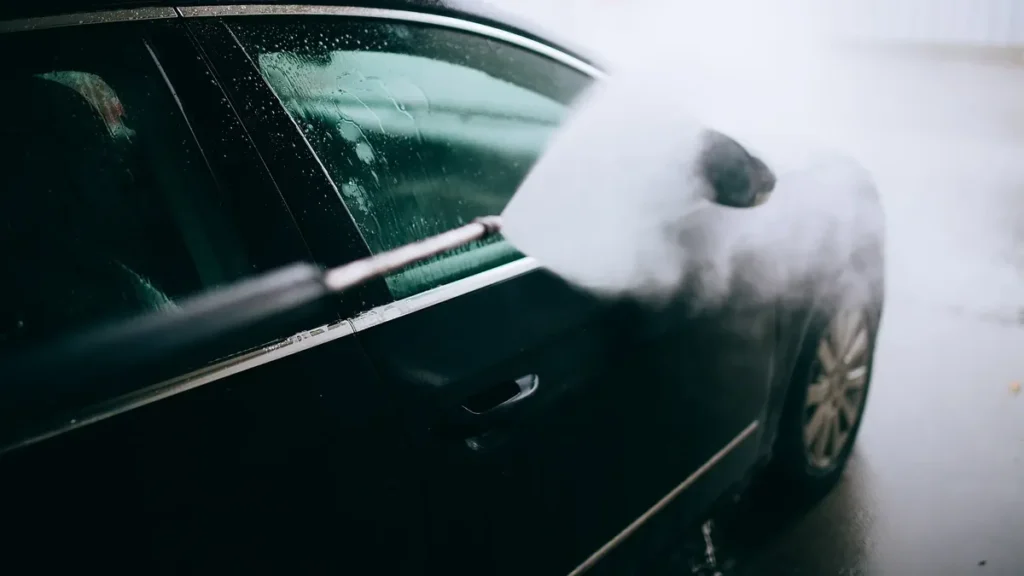
Ottawa cars deal with road salt, sand, moisture, and winter grime for much of the year.
Before listing a vehicle, check the areas where that contamination tends to collect:
- Floor mats
- Carpets
- Lower door panels
- Door jambs
- Wheel wells
- Wheels
- Trunk and hatch areas
- Lower body panels
Salt stains on carpets and mats are particularly noticeable when a buyer opens the doors.
The same applies to wheels. A vehicle can look clean from the street while still having several months of brake dust, salt, and road grime built up around the wheels and wheel wells.
If you’re selling in spring, summer, or early fall, cleaning off the accumulated winter grime is an easy way to make the vehicle look better without spending money on major cosmetic work.
Where I’d Spend the Money
If you’re paying for professional detailing before a sale, I’d prioritize the work in this order.
1. Odors
Deal with smoke, pet, food, or damp smells rather than covering them with fragrance.
2. Interior stains and grime
Clean the seats, carpets, mats, cup holders, door pockets, and other areas that buyers will see during an inspection.
3. Glass
Clean interior and exterior glass makes a surprisingly noticeable difference, especially in photographs.
4. Wheels and exterior grime
Clean the wheels, tires, door jambs, and lower body panels where dirt and winter contamination are most obvious.
5. Paint polishing
Consider polishing or paint correction only if the paint is otherwise in good condition and the vehicle’s value justifies the expense.
This order matters because the first four improvements are relatively inexpensive compared with major paint correction, while still addressing the things most buyers are likely to notice.
How Much Should You Spend?
There isn’t one correct detailing budget for every vehicle.
As a general rule, a basic professional detail in Ottawa can make sense when the car is dirty but fundamentally presentable. A more extensive service becomes harder to justify as the vehicle’s value and overall condition decline.
For example, if you’re selling a $6,000 car with a dirty interior, pet hair, stained carpets, and a neglected trunk, spending around $175-$325 to clean it properly may be reasonable.
If the same car has badly faded paint, rust, dents, and several deep scratches, spending another $300-$700 on paint correction probably isn’t.
Think about what a buyer will see during the first five minutes of an inspection. Spend money on those problems first.
Larger Vehicles Can Cost More
SUVs, pickups, vans, and three-row vehicles generally take longer to clean because they have more interior and exterior surface area.
A large SUV may have:
- More carpeting
- More floor mats
- More seats
- More cargo space
- More difficult-to-reach areas
Vehicle size isn’t the only factor, though. Condition matters just as much.
A small sedan that has carried a dog for five years can take considerably more work than a large SUV that has been kept clean.
When getting quotes, describe the actual condition of the vehicle rather than relying only on its size. Mention pet hair, stains, smoke odor, excessive dirt, or anything else that could affect the amount of work required.
Is Mobile Detailing Worth Considering?
Mobile detailing can be convenient when you’re preparing a vehicle for sale because you don’t have to take the car to a shop.
It’s particularly useful if you want the vehicle cleaned immediately before photographing it or showing it to buyers.
There are some practical limitations. Mobile services may require suitable parking space, access to water or electricity, or appropriate weather conditions. Some providers have their own equipment and can work independently, while others have specific site requirements.
Confirm those details before booking.
DIY or Professional Detail?
You don’t necessarily need a professional detailer.
A DIY cleanup may be enough if:
- The interior is already in decent condition.
- There are no serious stains or odors.
- The vehicle has been maintained regularly.
- You already have the necessary cleaning equipment.
- You’re comfortable spending a few hours doing the work.
Professional detailing becomes more useful when:
- There is embedded pet hair.
- Carpets or seats need extraction.
- The vehicle has persistent odors.
- Salt and grime are heavily embedded.
- The vehicle has been neglected.
- You need it ready quickly.
- You want paint polishing or correction.
If the car only needs a good vacuum, glass cleaning, wash, and wipe-down, paying for a major detailing package may be unnecessary.
What I Wouldn’t Spend Money On
A pre-sale detail isn’t the time to restore every cosmetic imperfection.
I’d be cautious about paying for:
- Multi-stage paint correction on a low-value vehicle
- Expensive ceramic coating immediately before selling
- Cosmetic work intended mainly to disguise major damage
- Repairs that cost substantially more than the likely increase in sale value
- Strong fragrance intended to hide a serious odor
If the vehicle has significant rust, a damaged bumper, worn tires, or a mechanical problem, those issues deserve more attention than perfectly polished paint.
A clean car can make a better first impression. It cannot turn a mechanically neglected or heavily damaged vehicle into a better car.
Prepare the Vehicle for Photos
Clean the car before taking your listing photographs.
Interior
- Remove personal belongings.
- Empty the trunk and cargo area.
- Vacuum the seats and carpets.
- Clean the floor mats.
- Remove visible stains where possible.
- Clean the glass.
- Make sure damp carpets and upholstery have dried.
- Avoid strong air fresheners.
Don’t forget the back seat and cargo area. Buyers often look there during an inspection, even if those areas aren’t prominent in the listing photos.
Exterior
- Wash the vehicle.
- Clean the wheels and tires.
- Clean the door jambs.
- Remove obvious road grime.
- Clean the exterior glass.
- Dry the vehicle thoroughly.
Then take photographs in consistent natural light where possible.
At minimum, photograph:
- Front
- Rear
- Both sides
- Wheels and tires
- Dashboard
- Front seats
- Rear seats
- Cargo area
- Odometer
- Engine bay, if appropriate
- Significant cosmetic defects
Don’t edit out damage that a buyer will see in person.
Showing imperfections clearly can actually make a listing more credible because the buyer knows what they’re walking into before arranging a viewing.
When Should You Detail the Car?
You don’t need to follow a strict rule such as detailing the vehicle exactly two or three days before listing it.
The practical approach is to schedule the work close to when you plan to photograph and show the vehicle, while giving the interior enough time to dry.
If the seats or carpets are extracted, ask the detailer how long they expect them to take to dry. If you’re having an odor treatment performed, ask whether the vehicle needs to sit for a particular period afterward.
For a normal wash and detail, photographing the car shortly after the work is finished is usually best. Waiting several days gives dust, pollen, rain, or new road grime a chance to undo some of the work.
Frequently Asked Questions
Does detailing guarantee that I’ll sell the car for more money?
No.
Detailing improves presentation, but it doesn’t guarantee a higher sale price. Mileage, maintenance history, mechanical condition, accident history, tires, body condition, comparable listings, and your asking price all matter.
Is a $200 detail worth it on a $5,000 car?
It can be.
If the car has obvious stains, odors, pet hair, or visible neglect, a reasonably priced interior detail may make sense. A large paint-correction bill is much harder to justify unless the vehicle’s condition and expected sale price support it.
Should I get paint correction before selling?
Only if the paint is a meaningful weakness and the vehicle is valuable enough to justify the expense.
Light swirl marks and dull paint can respond well to polishing. Deep scratches, rust, dents, and peeling clear coat require other repairs.
What if my car smells like smoke or pets?
Have the source assessed instead of trying to cover it with fragrance.
Smoke and pet odors can remain in carpets, upholstery, headliners, and other porous materials. The appropriate treatment depends on how deeply the contamination has penetrated.
Is a regular car wash enough?
If the vehicle is already well maintained, it might be.
A full detail becomes more useful when the car has stains, odors, pet hair, neglected areas, or other problems that a normal wash won’t address.
Do I need to clean the engine bay?
Usually not.
Unless the engine bay is unusually dirty or visibly neglected, I’d prioritize the cabin, glass, wheels, exterior, and cargo area.
The Bottom Line
A pre-sale detail is a presentation expense, not a guaranteed investment.
For most used vehicles, start with the things a buyer will immediately see and smell: the interior, carpets, seats, glass, wheels, cargo area, and obvious exterior grime.
Then look at the vehicle’s value and condition before paying for more expensive cosmetic work.
Paint correction can be worthwhile when the vehicle has light-to-moderate paint defects and otherwise presents well. It makes considerably less sense when the car has major rust, dents, deep scratches, peeling clear coat, or other problems that polishing won’t solve.
You don’t need the most expensive detail package.
You need the work that makes the biggest visible difference for the money.
For most sellers, that means a clean interior, clean glass, clean wheels, a clean exterior, good photographs, and an honest presentation of the vehicle’s condition.